Published 21 July 2026
Search "build vs buy AI" and you get a wall of near-identical posts, most written by firms that sell the build. That is a structural conflict of interest: a development shop cannot honestly tell you not to develop. They pad the page with dollar figures ($150K to build, a $780K sunk cost) that trace back to no primary source.
Here is the version written for the person who actually signs off: the non-technical executive. No strawmen, every number linked to its primary, and one option the dev-agency posts never name.
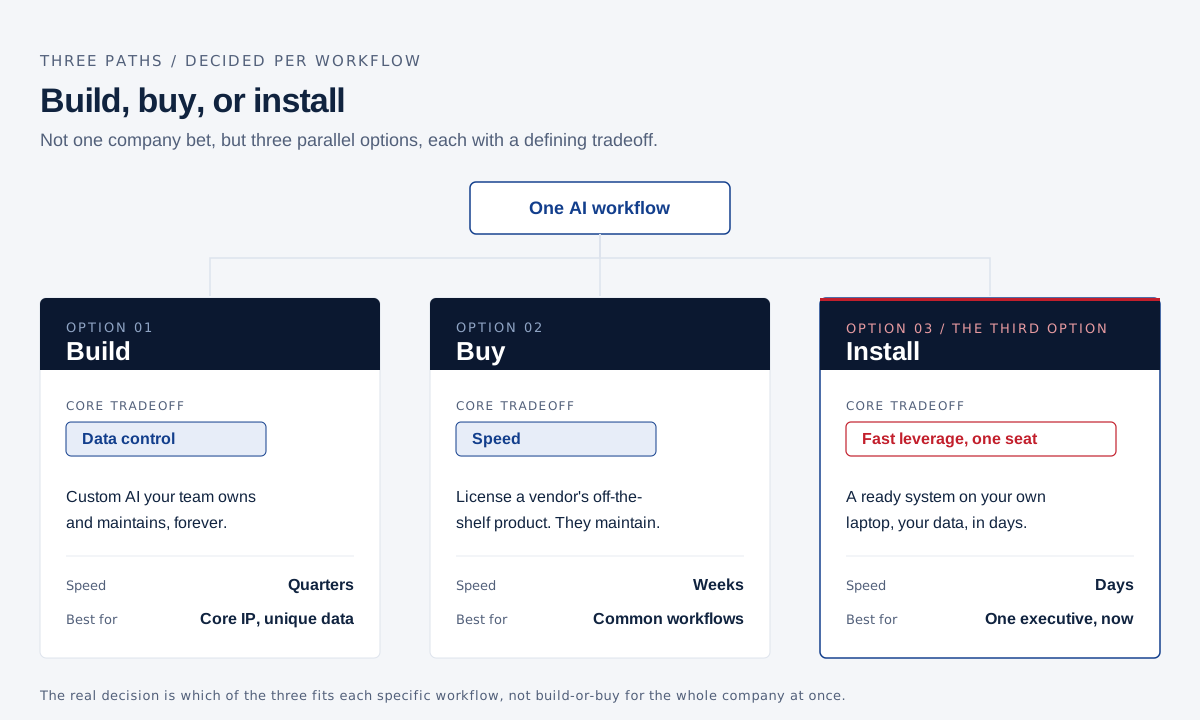
Build means commissioning custom AI your team owns and maintains. Buy means licensing a vendor's off-the-shelf product. Install means standing up a ready system on your own laptop, over your own company data, in days. The real decision is not build or buy for the whole company at once. It is which of the three fits each specific workflow.
That last point is the one everyone misses. This is not a one-time company bet. The winning move is to judge AI workflow by workflow, not with a single top-down verdict. So we will treat it that way.
What "build" actually means, and what the data says
There are honest reasons to build. If AI is your core product, if it runs on data no vendor has, or if data sovereignty is non-negotiable and no bought tool can meet it, build. When the model is the differentiator, owning it makes sense.
Now the cost nobody selling the build will quote you.
RAND found more than 80% of AI projects fail, about twice the rate of comparable non-AI IT projects. The root causes are not weak models; they are tech-first thinking, poor data quality, and misunderstanding the problem. Building puts all of that on your plate.
The build-versus-buy split is starker still. MIT's 2025 NANDA study found AI tools bought from specialized vendors succeed about 67% of the time, while internally built tools succeed roughly a third as often. The instinct to build your own is, statistically, the instinct to lose.
Gartner warns that most custom-model efforts get abandoned to cost, complexity, and technical debt, and advises tuning an off-the-shelf domain model before building anything custom. On budget, Gartner expects at least half of GenAI projects to overrun their costs through 2028, because moving from pilot to production can cost orders of magnitude more than the pilot did. And the bill never stops: whatever you build, you maintain, forever.
What "buy" actually means: the honest tradeoffs
Buying is the odds-on favorite for most workflows. MIT's ~67% success rate is the headline. You get value in weeks, not quarters, and someone else carries the maintenance. Gartner backs the direction: by 2028 it expects 80% of GenAI business apps to be built on existing data platforms rather than from scratch: buy and embed, not build-your-own.
The limits are real too. Bought tools give generic answers because they do not know your business. You inherit lock-in and pricing you do not control. And your data usually lives in the vendor's cloud, a line every executive should read carefully. We cover that on our security page.
One more honesty note for the buy side: not every "AI agent" on the market is real. Gartner estimates only about 130 of the thousands of vendors claiming "agentic AI" are the genuine article. The rest is "agent washing." When you buy, you are also buying the risk of buying theatre.
The third option nobody names: install
There is a path between build's data control and buy's speed, and the dev-agency posts never mention it because they cannot sell it.
Install is a done-for-you executive system: a ready AI setup that stands up on your own laptop, over your own company data, in days. You do not commission it (build) and you do not rent generic answers in someone else's cloud (buy). You install a working system that already knows how to reason over your documents, private by design.
It gets you build's benefit (answers grounded in your own data, on hardware you control) with buy's speed. No two-year roadmap, no steering committee, no vendor-selection cycle.
Be honest about the limit. Install is leverage for one seat, not org-wide transformation. It makes you, the individual executive, faster this quarter. It does not, on its own, make the whole company AI-native; that still takes the slow institutional work RAND and MIT describe. What it removes is the wait.
AI Board is your personal AI assistant that makes you an AI-native executive: an AI CEO, CFO and CTO on your own laptop, grounded in your company's data and getting sharper as your data grows. Private by design, fast, and ahead of the executives who wait.
A decision framework: five questions to place any AI workflow
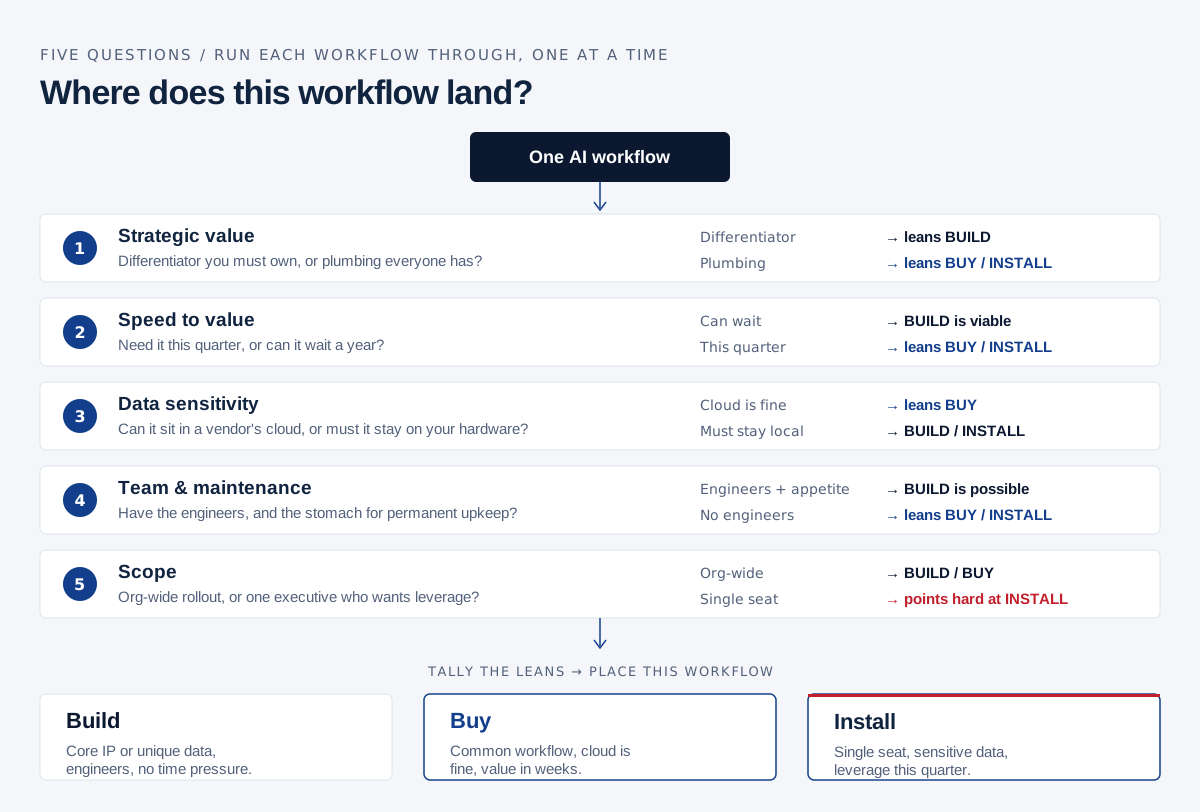
Do not decide build-vs-buy once for the company. Run each workflow through five questions.
- Strategic value. Is this AI a differentiator you must own, or plumbing everyone has? Differentiators lean build; plumbing leans buy or install.
- Speed to value. Do you need it this quarter or can it wait a year? Fast points away from build.
- Data sensitivity. Can this data sit in a vendor's cloud, or must it stay on hardware you control? Sensitive data points to build or install.
- Team and maintenance appetite. Do you have the engineers, and the stomach for permanent upkeep? No engineers points away from build.
- Scope. One executive who wants leverage, or an org-wide rollout? A single seat points hard at install.
| Build | Buy | Install | |
|---|---|---|---|
| Speed | Quarters | Weeks | Days |
| Data control | Full | Vendor cloud | On your laptop |
| Maintenance | You, forever | Vendor | Minimal |
| Best for | Core IP, unique data | Common workflows | One executive, now |
| Success odds | Lowest (~1/3 of buy) | Highest (~67%) | Fast leverage, one seat |
Why most build-vs-buy advice fails the executive who has to decide
Three things break the standard advice. First, the conflict of interest: most of page one is written by firms that profit from the build, so "it depends, go hybrid" is their safe hedge, not a finding. Second, the false binary of build or buy, which hides the install option that fits a single leader. Third, the unsourced numbers, those tidy dollar figures with no primary behind them.
Strip all that away and the real risk changes shape. It is not picking wrong. Your people already went AI-native without you, and that is the pattern behind why so many top-down AI projects fail while individuals quietly get faster. The enemy is not the wrong choice. It is waiting. The AI-native executive is the one who moved while peers debated frameworks.
This mirrors the debate over an AI CFO versus a fractional CFO: the honest answer is rarely "the biggest, most-owned option," and almost always "the one that gives you leverage now."
How to actually start this quarter
Pick one workflow where you already know the answer would help: a board pack you have to interrogate, a set of numbers you keep waiting on finance to pull. Do not scope an IT programme. Start at the top, on your own laptop, over your own data, in days.
Honest limit, one more time: this makes you faster, not the whole company. It is chat with your own data for the person who signs off: an AI CEO view of the business, an AI CFO on the numbers, a company brain behind both. Org-wide transformation is a separate, slower job. This is the part you can start alone, now.
FAQ
Should I build or buy AI?
For most workflows, buy, or install. MIT's 2025 research found bought AI tools succeed about 67% of the time versus roughly a third as often for internal builds. Build only when the AI is your core differentiator, runs on data no vendor has, or must meet data-sovereignty rules no bought tool can. Decide per workflow, not once for the whole company.
Is it cheaper to build or buy AI?
Almost always cheaper to buy or install. Building carries a permanent maintenance tail, and Gartner expects at least half of GenAI projects to overrun their budgets through 2028, with pilot-to-production costing orders of magnitude more than the pilot. Beware fixed build-cost figures online; most trace to no primary source.
What's the success rate of building vs buying AI?
MIT's NANDA study found bought tools succeed about 67% of the time and internal builds roughly a third as often. Separately, RAND found over 80% of AI projects fail, about twice the rate of comparable non-AI IT. Buying is the statistically safer bet.
What is the third option between build and buy?
Install: a done-for-you AI system that stands up on your own laptop, over your own company data, in days. It combines build's data control with buy's speed, without commissioning custom software or putting your data in a vendor's cloud. The honest limit is that install gives leverage to one executive, not org-wide transformation.
Should a non-technical executive ever build custom AI?
Rarely, and almost never as a first move. Building demands engineers, a permanent maintenance commitment, and tolerance for high failure odds. A non-technical executive who wants results this quarter is far better served buying a proven tool or installing a ready system over their own data, then building only if a specific workflow proves it needs custom ownership.
You do not have to resolve the whole build-vs-buy question to move. Pick one workflow, install over your own data, and get the leverage this quarter, while the market keeps arguing about frameworks. Request access →