Every AI adoption guide written for a 50-to-500-person company says the same thing: pick one pain point, use a built-in tool, run a 90-day pilot, measure the ROI, then scale. Forbes calls it the 90-day playbook every small business needs. It is the default advice on page one of the search results, and it is wrong in a specific, expensive way.
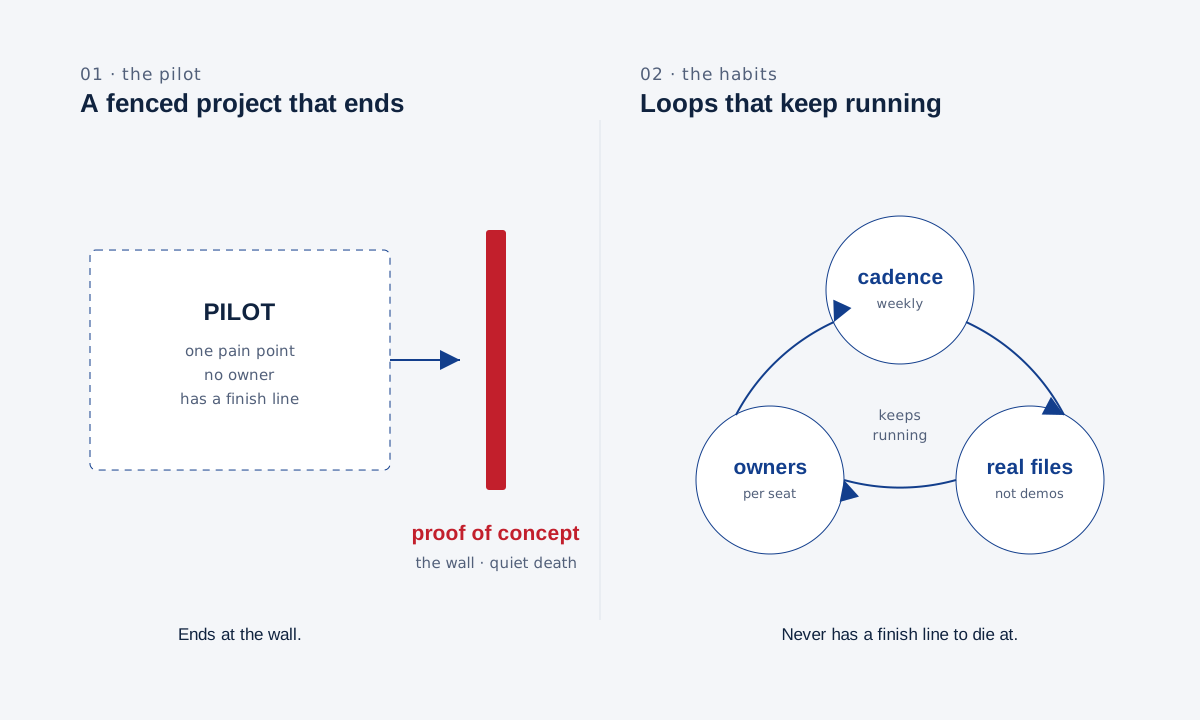
The pilot is not the on-ramp to adoption. In the data, the pilot is the failure mode.
This playbook argues the opposite of the consensus. You do not adopt AI by launching a project and proving it. You adopt AI by installing three habits: a weekly cadence, an owner per seat, and real files. Everything below is sourced, and where a number is contested we say so.
The pilot trap
Start with why "run a pilot" fails so reliably.
MIT's NANDA initiative found that about 95% of enterprise generative-AI pilots deliver no measurable P&L impact, with only around 5% reaching rapid value. That 95% is contested honestly: small sample, a loose definition of "failure." Treat it as an alarm, not a decimal. But it does not stand alone. Gartner predicts more than 40% of agentic-AI projects will be canceled by the end of 2027, citing escalating costs, unclear value, and weak risk controls. RAND found more than 80% of AI projects fail, roughly twice the rate of comparable non-AI IT work.
Whatever the exact figure, the direction is not in dispute: fenced AI projects fail more often than they land.
The reason sits in one line from Google Cloud's 2025 DORA report: AI amplifies what is already there. Strong teams get stronger; struggling teams see their problems intensified. A pilot is a fence around a small piece of work with no owner and no standing place in how the company runs. There is nothing there for AI to amplify. You get a demo, a slide, and a quiet death after the proof of concept. If you want the full ledger of failure numbers, we keep it here: why AI projects fail.
What the data actually rewards
If the pilot is the wrong unit, what is the right one? The evidence points at habits, not tool count.
McKinsey's State of AI found that 88% of organizations report using AI, but only about a third have scaled it. The gap between using and scaling is where most companies live. What separates the ones that cross it: AI high performers are 2.8 times more likely to report fundamentally redesigning workflows: 55% of them versus 20% of everyone else. And the single practice most associated with bottom-line impact is not a tool or a budget. It is CEO oversight of AI governance.
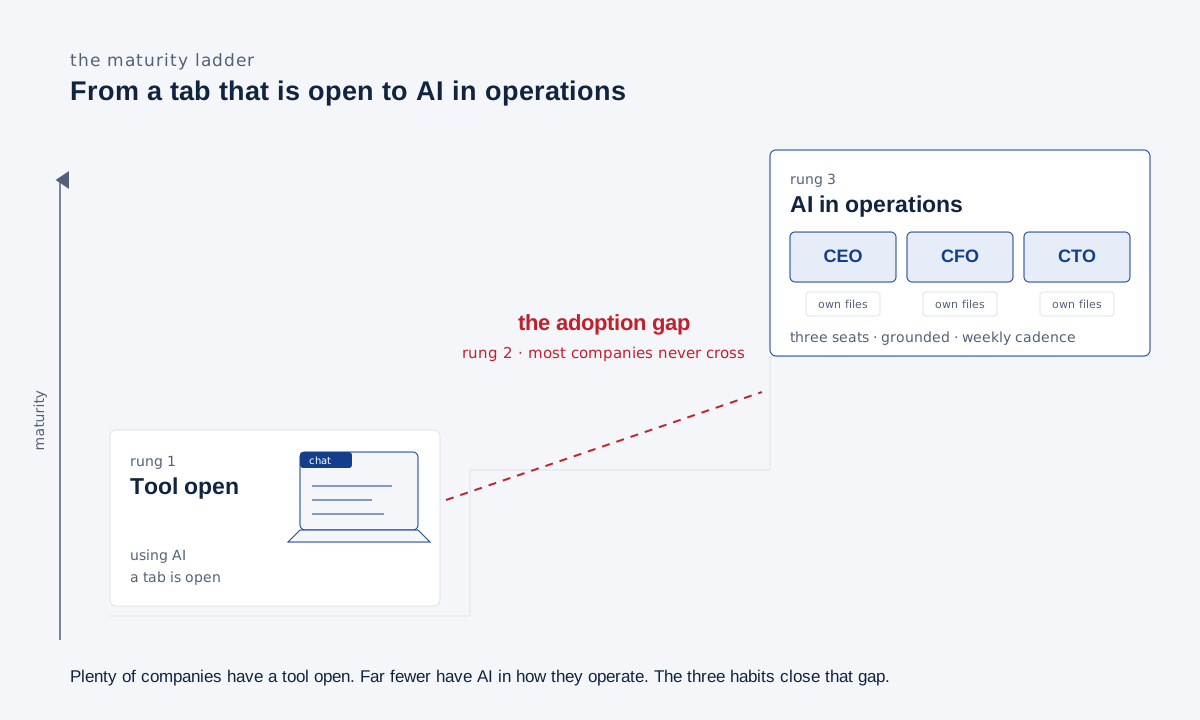
The same split shows up at the company level. The U.S. Census Bureau found that 37% of firms with at least 250 employees use AI in their business functions, against under 20% of the smallest firms, while national AI use hovered between 17 and 20%. Census measures AI in operations, a stricter bar than "a tool is open in a tab." Meanwhile the U.S. Chamber of Commerce reports 58% of small businesses now use generative AI, up from 40% in 2024.
Read those together and the real gap is clear. Plenty of companies have a tool open. Far fewer have AI in how they operate. Closing that gap is not about buying more tools. It is about building habits. Here are the three that matter.
Habit 1: a weekly cadence
The first habit is the simplest and the one everyone skips: put AI on the calendar. A standing weekly session, not a project with an end date.
A pilot has a finish line, which is exactly why it dies at the finish line. A cadence never finishes. In a 50-to-500-person company, a first weekly session is small and concrete: the leadership team blocks 30 minutes, each executive brings one real question about their part of the business, and they ask it of AI grounded in the company's own data, in the room, out loud, together. Next week they do it again. That is the entire mechanism.
The cadence is what makes DORA's "amplify what is already there" work for you instead of against you. A weekly ritual gives the tool a place in the operating rhythm, so the compounding has somewhere to accumulate. Miss the point about repetition and you are back to a pilot with better branding.
Habit 2: an owner per seat
The second habit is accountability. Not a committee, not a Center of Excellence, not a Chief AI Officer parachuted over everyone. An owner per seat.
McKinsey found CEO oversight of governance is the practice most tied to bottom-line impact. Operationalize that down the table. The CEO owns the company-wide view: the whole business at once. The CFO owns the numbers. The CTO owns the technical estate. Each executive owns their own AI and, more to the point, their own decisions made with it. Ownership is per seat because accountability is per seat.
This is where the persona pages come in, and each is a genuine job, not a role-play avatar. Your AI CEO reasons across the whole company. Your AI CFO answers before finance closes the month. Your AI CTO works at architecture level. Same engine, different seat, different owner. A committee diffuses responsibility until nobody adopts anything. An owner cannot hide behind the group.
Habit 3: real files, not demos
The third habit decides whether the other two produce anything real: ground every session in the company's actual files. The board pack. The ledger. The pipeline. Not a canned demo dataset, not a generic model answering from thin air.
Your people already do this, quietly and without permission. The same MIT report found that at over 90% of companies, employees regularly use personal AI tools for work, while only about 40% of those companies have an official AI subscription. That is the shadow AI economy, and it is proof of demand: staff paste real work into consumer chatbots because grounded answers beat generic ones. The problem is not the instinct. It is that it happens off the books, ungoverned, on data that should never leave the building. We wrote about that pattern in full: the shadow AI economy.
The habit is to make it official. Point executive-grade AI at your own company's data, so every session is grounded, private by design, and answering from what is actually true about your business. This is the difference between chatting with your data and watching a demo. A demo is someone else's numbers. Real files are yours, and they are the only thing worth building a habit around.
The 90-day arc, reframed
You can keep the 90-day window from the pilot playbook. Change what it is for. You are not proving a project. You are installing a habit.
- Weeks 1-4: stand up the cadence and the owners. Get the weekly session on the calendar. Assign a seat to each executive. Nobody has to be impressive yet; they just have to show up and bring a real question.
- Weeks 5-8: owners work their own data unprompted. The CFO stops waiting to be asked and interrogates the numbers before the meeting. The CTO turns architecture questions around in an afternoon. The behavior starts happening between the weekly sessions, not just inside them.
- Weeks 9-12: self-sustaining. The cadence runs itself. You measure the right thing: not tool ROI, but whether decisions changed: faster answers, fewer two-week waits, questions asked before assumptions get made.
The contrast is the whole point. The pilot arc ends with a business case you take to a committee to decide whether to scale. The habit arc ends with a company that already runs this way, because there was never a moment where it stopped and asked permission to continue.
What this playbook does NOT fix
Three honest limits, because a playbook that promises everything is selling something.
It does not make your whole company AI-native by itself. DORA is clear that the value comes from reimagining the system of work, and that is organizational change, and it still takes the organization. Three habits at the leadership table are the start of that, not a substitute for it.
It is not a headcount or cost-cut play. If you are adopting AI to shrink the org, the evidence points the other way: the U.S. Chamber found 82% of AI-using SMBs increased headcount over the past year. This is about better decisions, not fewer people.
And no cadence rescues bad data or an unclear question. Ground a weekly session in a broken ledger and you get confident wrong answers on a schedule. The habits amplify; they do not repair. Fix the question and the data first, then let the habit compound.
FAQ
Why do most AI pilots fail?
Because a pilot is a fenced project with no owner and no standing place in how the company runs, and AI amplifies what is already there, so a fenced pilot with nothing to amplify produces a demo and then stalls. MIT NANDA found about 95% of enterprise GenAI pilots show no measurable P&L impact (a contested figure, but directionally backed by Gartner and RAND). The fix is not a better pilot. It is a habit that never has a finish line to die at.
How should a 50-to-500-person company start with AI?
Not with a pilot. Start with a weekly cadence, an owner for each executive seat, and real company files in every session. Block 30 minutes a week, give the CEO, CFO, and CTO each their own AI and their own decisions, and ground every question in your actual board pack, ledger, and pipeline. Adoption is a habit you install, not a project you prove.
Do we need a Chief AI Officer?
Usually not. McKinsey found the practice most tied to bottom-line impact is CEO oversight of AI governance, which you operationalize by giving each executive seat ownership of its own AI, not by appointing one person to own it for everyone. An owner per seat beats a single officer or a committee, because accountability that sits with the decision-maker is the accountability that produces adoption.
What's the difference between using AI and adopting it?
Using AI is having a tool open in a tab. Adopting it is having AI in how you operate. Census measures the second, stricter bar, and McKinsey found 88% of organizations use AI while only about a third have scaled it. The gap between the two is not closed by more tools. It is closed by cadence, ownership, and grounding in real data: the three habits above. If you want the fuller picture of the role this creates, here is what an AI board member does.
You do not need another pilot to prove. You need a cadence to keep, a seat for each of your executives to own, and your own real files under every question they ask. Install those three habits and adoption stops being a project you launch. It becomes the way the leadership table already runs. See what that looks like with your own company's data →