The term "second brain" was popularized by Tiago Forte to mean an external, digital store for the things you learn and write down. Notes, highlights, saved articles, captured, organized, and kept for later.
That is a good idea for a knowledge worker. It is the wrong altitude for an executive.
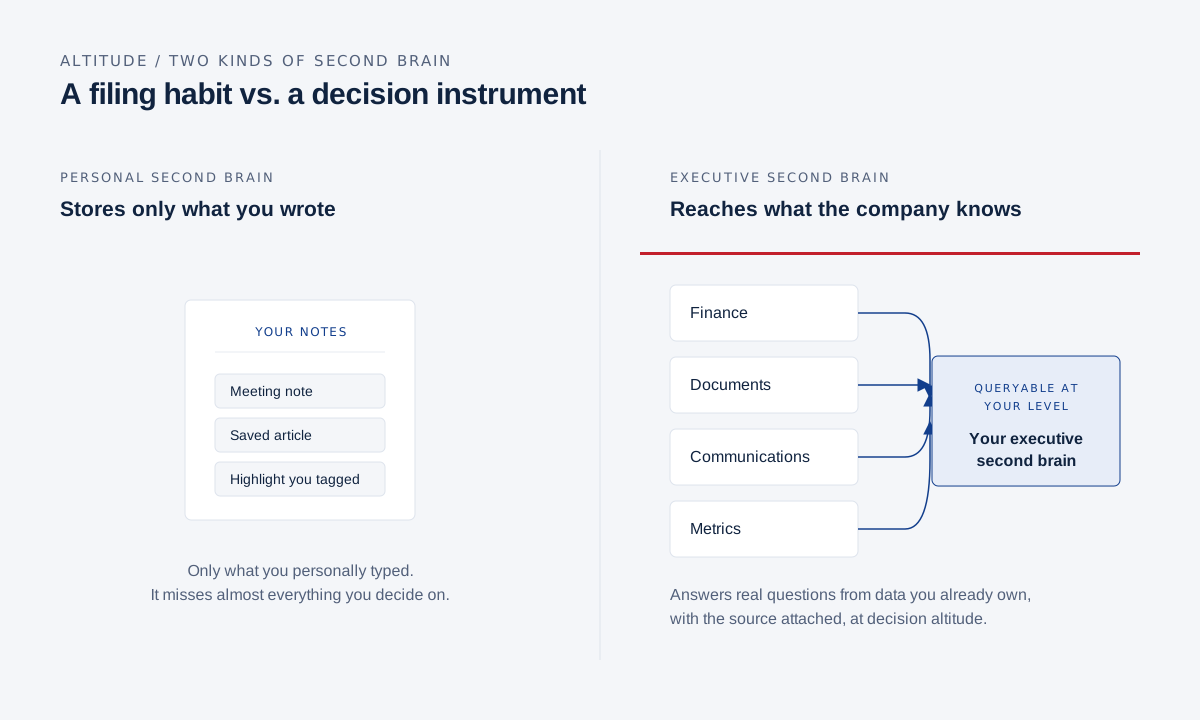
Your knowledge is not in your notes. It is in hundreds of files you did not write: board packs, monthly reports, contracts, the finance model, the last three quarters of email. A second brain that only holds what you personally typed misses almost everything you actually decide on.
What an executive second brain actually is
An executive second brain is your own company's files made queryable at your level. Not a note-taking app, but a system that reaches into finance, documents, communications, and metrics you already have, and answers real questions about them in minutes, with the source attached.
Draw the line clearly. A classic second brain stores what you wrote down. An executive one reaches what the company already knows. One is a filing habit. The other is a decision instrument.
The word that matters is altitude. This is not your team adopting a chatbot three floors down. It is you, the person who has to make the call, asking your own data directly, at the level of the decision.
Why the old "second brain" stops at the executive's door
The personal-productivity version runs on discipline. You capture a note, tag it, file it into a folder system, and trust that a cleaner version of you will curate it well. Forte's method (Capture, Organize, Distill, Express) is built around exactly that hand-curation, in a tool like Notion or Obsidian.
That works when the knowledge you need is knowledge you chose to save. It breaks the moment your real answers live in files you never touched: the actuals finance closed last week, the commitments buried on slide 14 of the board deck, the clause in a contract you signed two years ago.
The problem was never note-taking discipline. It is reach. An executive does not need a tidier personal archive. They need to get at the answers that already exist in company data, fast, and at decision altitude. No amount of tagging your own highlights gets you there.
What you get in week one
Here is the concrete part, and it is where the category actually pays off.
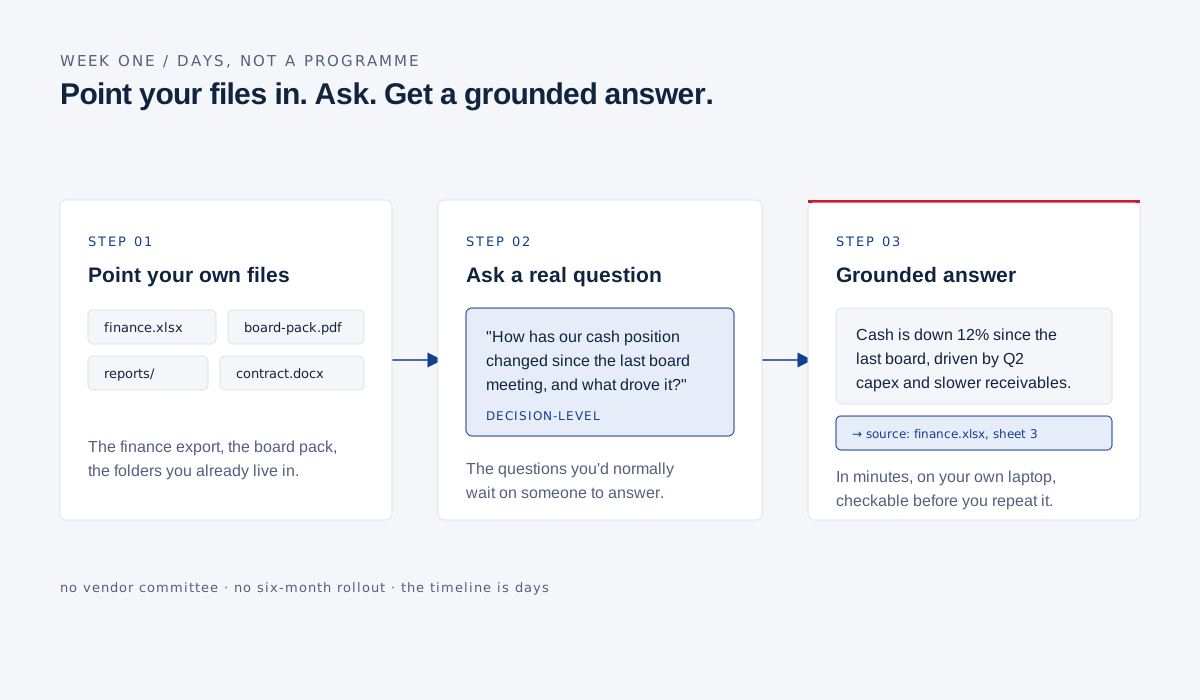
You point your own files at it: the finance export, the board pack, the reports, the folders you live in. Then you ask the questions you would normally wait on someone to answer:
- "How has our cash position changed since the last board meeting, and what drove it?"
- "What did we commit to in the last board pack, and where are we against each one?"
- "Which parts of the plan are we behind on, and why?"
You get grounded answers back in minutes, with the source document cited, on your own laptop. Not a summary invented from thin air, but a pointer to the exact file and figure, so you can check it before you repeat it in a room.
The timeline is days, not an IT programme. No vendor-selection committee, no six-month rollout, no line item to defend. You are not launching a transformation. You are pointing capable AI at data you already own and asking it to work at your level.
The cost of not having one
Do the arithmetic on the alternative, because you are already paying it.
A 2012 McKinsey Global Institute study found the average interaction worker spends nearly 20% of the workweek looking for internal information or tracking down the colleague who can help. A full day a week, gone to hunting for things the organization already knows.
For an executive the cost is not just the hour. It is the staleness. When the answer takes two weeks and three meetings to surface, you decide on old context, or you decide without it and hope. The wait is the tax. It is the difference between walking into the room briefed and walking in guessing while someone "pulls the numbers."
Grounded, not guessing: why "your own files" is the whole point
A generic chatbot with no access to your data does one thing when it does not know: it invents something plausible. That is fine for drafting an email. It is a liability when the question is your runway.
A second brain grounded in your files does the opposite. It answers from your actual documents and shows you where it got each figure. The value is not the model. It is the grounding.
This matters more because the ungrounded version is already loose in your company. MIT's NANDA researchers found that employees at over 90% of companies already use personal AI tools for work, most without permission, most by pasting real work context into a consumer chatbot. That context is your company's data, leaving the building one prompt at a time.
The bill for that arrives eventually. IBM's 2025 Cost of a Data Breach report found breaches involving heavy shadow AI cost about $670,000 extra on top of the $4.44M global average, and that 97% of organizations with an AI-related breach lacked proper AI access controls. The safe version of this capability is one where the data stays where you control it, which is the entire design point. That is what we mean by private by design, and it is why the answers come from your own company's data rather than a public model's guess.
Second brain vs. note app vs. chatbot
Three different things get called the same name. Here is the line between them.
| Personal note-taking second brain | Generic AI chatbot | Executive second brain on company data | |
|---|---|---|---|
| What it knows | Only what you saved | The public internet, up to a cutoff | Your own company's files |
| Where the data lives | Your notes app | The vendor's servers | On your laptop, under your control |
| Who it's for | Any knowledge worker | Anyone | The decision-maker |
| What you can ask | "Find my note on X" | General questions | "How did cash change since the last board?" |
The note app remembers what you chose to write. The chatbot knows everything except your business. Only the third one answers the questions that actually land on your desk.
How to start: days, not a programme
You do not need a project for this. You need your files and an afternoon.
AI Board is your personal AI assistant that makes you an AI-native executive: an AI CEO, CFO and CTO on your own laptop, grounded in your company's data and getting sharper as your data grows. Private by design, fast, and ahead of the executives who wait.
Point it at what you already have, on the one machine you fully control. Grounded in your data, private by design, answering at your altitude. Turn the same capability toward the whole company and it is your company brain; point it at the numbers and it is your AI CFO; point it across the business and it is your AI CEO.
Be honest about the limit. A second brain is leverage, not a replacement for your team, your judgment, or the call itself. And it is only as good as the files you point at it: garbage in, confident garbage out. It does not fix your data. It reaches the answers that are already in it.
And it only gets more useful: every board pack, report and contract you add makes the next answer sharper, because it is grounded in more of what your company actually knows. Not a model trained on you, just your own vault, deepening.
If you want the fuller picture of the role this creates, here is what an AI-native executive is, and here is the shadow-AI economy already running underneath you without one.
FAQ
What is a second brain for executives?
An executive second brain is your own company's files made queryable at your level. It reaches into finance, documents, communications, and metrics you already have and answers real questions about them, with the source attached, in minutes. Unlike the personal-productivity version, it stores not what you wrote but what the company already knows.
How is it different from Notion, Obsidian, or Building a Second Brain?
Tiago Forte's Building a Second Brain and tools like Notion or Obsidian hold notes you capture and curate by hand. That is a personal filing habit. An executive second brain works on the files you never wrote (board packs, the finance model, contracts, reports) and answers decision-level questions about them. Different altitude, different data, different job.
What can I actually ask it in week one?
Real executive questions grounded in your files: how your cash position changed since the last board meeting and why, what you committed to in the last board pack and where you stand against each item, or which parts of the plan you are behind on and the reason. You get answers in minutes with the source cited, not in two weeks after three meetings.
Is my company data private, or does it leave my laptop?
The whole point is that it runs on your own laptop, grounded in your data, private by design. That is the opposite of the shadow-AI pattern where staff paste company context into a public chatbot, the risk IBM prices at hundreds of thousands per breach. See how we handle security for the detail.
The second brain that matters at your level is not a tidier note archive. It is your own company's knowledge, finally answerable, before the executives still waiting for someone to pull the numbers. Request access and put your own files behind it →